A Supporter’s Case Against the SFA’s Standards

A Rangers supporter argues Scottish football’s credibility is being damaged by what they see as inconsistent SFA oversight, with refereeing, fixtures and discipline all viewed through the same lens of unfairness.
For generations, Scottish football was defined by passion, tribalism, and most importantly, a sense that the rules applied equally to all. That last pillar is gone. And the Scottish Football Association (SFA) is the one holding the wrecking ball.
This past season, and for several before it, a mounting pile of circumstantial evidence suggests the SFA has abandoned any pretence of neutrality. Whether through ignored rules, bent procedures, or deafening silence on scandals that would have sunk any other club, the governing body has consistently acted, or failed to act, in ways that benefit Celtic FC. The result? A dying league, a demoralised youth system, and a reputation for fairness that has been chiselled away beyond repair.
Rangers, 2012, and the comparison being drawn
In 2012, Rangers were thrown to the wolves over tax issues. The SFA and SPFL did not just punish the club, they forced rival clubs to vote on whether Rangers should be expelled from the top flight. They were demoted to the lowest tier, effectively starting again from scratch. That decision sent a message: no club is above the rules. Let it be known that the debt was greatly exaggerated and those turning the screws were caught, but nothing was done about them.
Now contrast that with Celtic. For decades, systematic child abuse occurred within Celtic's youth system and boys' clubs operating under their banner. This season alone, Celtic settled with multiple victims, effectively admitting that they knowingly employed perpetrators and turned a blind eye. These were not historical administrative errors. These were crimes. And the SFA? Silence. Not a single charge of bringing the game into disrepute. No points deduction. No demand for answers. No relegation. No stripping of titles from that era. The SFA has enough power and leverage to apply some rules and at least address this, but they did not. No effort whatsoever.
If the SFA can bankrupt Rangers for financial mismanagement, why can it not even speak about institutional abuse? The only difference is the name on the jersey.
Discipline, refereeing and the VAR frustrations
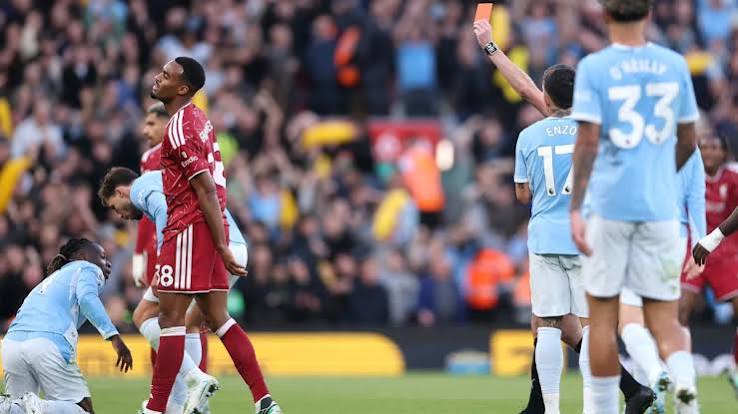
Statistics can be misleading. But when a team goes more than 90 consecutive league matches without a single red card, in a contact sport like Scottish football, eyebrows must be raised. That streak ended this season, coincidentally, only after it was publicly pointed out by analysts and former officials. For years, cynical fouls, tactical pulls, and last-man challenges somehow never met the threshold for a sending-off. The SFA's referee compliance department saw nothing. No pattern. No concern. Just a remarkable, league-defying run of discipline that no other club in Europe could match.
Referee John Beaton was placed under extraordinary pressure midweek to award Celtic a last-minute penalty. Replays showed minimal contact, and the decision was widely criticised by media and former footballers alike. The narrative was already written: Celtic needed a penalty, and Beaton delivered.
Then came today's match. Another penalty for Celtic. Another controversy. This time, the attacking player was clearly offside in the build-up and eventually scored. VAR checked. No overturn. No Scottish team outside the Old Firm would have been given that decision. The silence from the SFA's referee department was, by now, predictable.
Added time, the split, and the sense of a tilted system
Watch any Celtic match deep into stoppage time. The fourth official's board goes up for four minutes. Celtic trail. Somehow, the game stretches to six, seven, or eight minutes. And repeatedly, almost predictably, Celtic score a last-minute equaliser or winner. These are not anomalies anymore; they are a feature. Opposing managers have complained only to be fined for dissent. The SFA's own data on added time inconsistencies has never been published. Fans of every other club see it. The SFA pretends it does not.
The post-split fixture system was meant to be fair and has always been. Top six, everyone plays each other once, home and away balanced across the season. So why, this season, did Celtic get their home game against league leaders Hearts as the final match, almost as if they knew they could make it down to the wire? At home. Traditional rotation was ignored. Celtic's advantage was preserved. Hearts were forced to play at Celtic Park in a decisive match, while their own home fixture against Celtic had already passed. The SFA's own committee signed it off. No other top club would have received that luxury.
Crowd trouble and the call for action
Here is the most damning recent incident. Before the final whistle, home fans invaded the pitch and assaulted Hearts players. Under SPFL and SFA rules, that constitutes an abandonment scenario. The rulebook states that if a match is abandoned due to crowd trouble before full time, the offending club forfeits the match 3-0. That rule has been enforced against other clubs.
This time? Silence. There will be no 3-0 awarded to Hearts. No points deduction. No public rebuke. The SFA will simply look away.
Scottish football is dying. Attendances outside the top two are flat or falling. Sponsors are harder to attract. And crucially, young Scottish players are turning away from the professional game. Why would they not? They see a system where fairness is a joke. They see that playing for any club outside Celtic means playing against not just eleven men, but against a governing body that bends rules, ignores offences, and protects the brand at all costs. Integrity is not a reputation, it is the currency of sport. The SFA has spent it all.
The result is a generation of Scottish youth who look at English academies, European pathways, or even rugby and other sports. They do not believe Scottish football is a meritocracy anymore. And they are right.
The rest of the league's members cannot wait any longer. Silence is complicity. Clubs must do three things immediately: a collective legal challenge to the SFA's governance, citing breach of duty to promote and regulate football fairly under Scottish law and UEFA statutes; a boycott of the league structure unless an independent review is launched into fixture manipulation, refereeing patterns, and disciplinary inconsistency; and a demand that past wrongs be made right, including the SFA addressing Celtic's historical child abuse scandal as a disrepute matter under its own Articles of Association, with trophies stripped from the abusive era and relegation to the bottom tier.
The SFA was created to promote Scottish football. Instead, it has protected one club while letting the foundations rot. If they will not act, the clubs must. Otherwise, in ten years, there will be no Scottish football left to save.
Discuss rumours and transfers on our Rangers rumours web page
Discuss rumours and transfers on our Celtic rumours web page